Friday, April 15, 2011

APRIL AT THE DISMAL SWAMP

This was a long, brutal winter, wasn’t it? Record snow and record low temperatures, and everyone got sick at some point (I got Whooping Cough, for heaven’s sake! Who gets that???). Winter seemed endless, but it’s finally spring, and for me, April is the ultimate cure for the doldrums. And as always, my favorite place to go to commune with nature and witness its reawakening is the Dismal Swamp.

Mid-April is when most of the migrant birds start arriving here from more southern regions. Some butterflies and dragonflies have actually been active on warm days since early March, but of course as the weather warms up, there are many more emerging every day. If you are interested in observing and learning about the living creatures in the Dismal Swamp, right now is the time to go, when natural activity is building towards its peak and the weather has not yet become oppressive, as it does by summertime.

On May 12, 13 and 14, the Great Dismal Swamp National Wildlife Refuge will host its 2011 Birding Festival. If you visit them online at http://www.fws.gov/northeast/greatdismalswamp you will find the link to their schedule of events. They are also taking reservations now for guided walks, bus tours, and workshops that they will sponsor, so if you’re interested, be sure to register early, before everything fills up.

Personally, I like to visit The Swamp alone. I prefer the wilderness and solitude, and I love to take long slow walks down Washington Ditch, Jericho Ditch, and sometimes Railroad Ditch. I like to feel like I’m the only person out there, witnessing nature at its heart. It’s a very spiritual experience, and it always refreshes and rejuvenates me. Some of my friends worry "But aren't there Black Bears out there?" Well, yes there are, and here's a picture of the one I saw yesterday along Washington Ditch, not far from the parking area! Maybe I should worry more, but I was just excited to see it (at a reasonable distance). I think this is the third bear I've seen in The Swamp, but you're really not very likely to run into one; they do want to avoid us more than we want to avoid them.

The little yellow bird in the photo at the start of this entry is one of the “signature” birds of the Dismal Swamp, a Prothonotary Warbler. This is a bright little bird of the warbler family that breeds in southeastern swamps, and nests in cavities rather than building its nest in branches like most other birds of its kind. Prothonotaries just returned to The Swamp this week from their winter quarters, and as I took my walk yesterday I was surrounded by dozens of them singing their songs and beginning to squabble with each other over breeding territories. Pure joy! For those of you who know your warblers, I also heard or saw Swainson's, Yellow-throated, Prairie, Hooded and Yellow-rumped Warblers, Ovenbirds, American Redstarts, Louisiana Waterthrush and Common Yellowthroats.

The bird song usually starts to diminish a bit around 10:00, but that's when it starts warming up and the butterflies and dragonflies get more active. It's still early spring so many species aren't out yet, but I was excited by the numbers and variety of insects that I saw. Here are some of my favorites:

This little butterfly (above) is called a Pearl Crescent. This species is common now at The Swamp, and you could see one just about anywhere, all summer long.


Not to be confused with the ubiquitous Cabbage White butterfly that you see everywhere, this one is a Falcate Orange-tip. They are early spring butterflies that will disappear sometime in May. You will probably not see one in your yard, but if you visit The Swamp now you're sure to see several. Males have the orange tips on the wings; females do not.


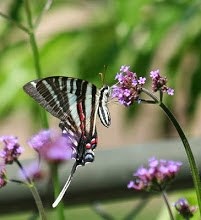
This beauty is not a butterfly; it is an Eight-spotted Forester Moth. They're hard to miss if they cross your path. These too are only active in the early spring.


"Elfins" are one of my favorites. Members of the "Hairstreak" family of butterflies, they are about the size of a dime, but for such a small creature they have such complex patterns in their wings! Above is a Henry's Elfin, which is common-to-uncommon in The Swamp in early spring; below is its less common cousin the Eastern Pine Elfin, also an early spring species. This is actually the one and only Pine Elfin that I've ever seen in The Swamp, because they are usually high up in the pine trees and tough to spot.


Below is a Lace-winged Roadside Skipper (an awfully long name for a little guy the size of a nickel). Again, look at the intricacies of its wing pattern; just gorgeous! These will be found in swampy areas all summer long.


And last, I couldn't pass up sharing a couple of dragonfly photos. Again, it's too early in the season to find most species out flying, but these two are early emergers in The Swamp. The first is a Common Baskettail, which are usually the first species I see in the spring. The second is a Spring Cruiser, and this was the first time I have seen one. (Also present now are Harlequin Darners, which will fill the skies at The Swamp in the next few weeks on warm days).


Later this week I will be taking a short trip to southern Florida, not because I'm particularly fond of Florida but because there are bird, butterfly and dragonfly species there that do not occur this far north. I can't wait to see some new "life" critters and maybe share some photos from there next time. Enjoy the spring, everyone!

Monday, March 28, 2011

HERONS AND EGRETS AND BITTERNS, OH MY!


When I mention my interest in birding to non-birding people, they‘ll often respond by telling me about a bird that they themselves have noticed, and it’s almost always a Great Blue Heron that they’ve seen in their local pond. Great Blue Herons are large, impressive, and conspicuous, and get noticed even by people who don’t notice birds. When they fly, with their long necks folded into an “S” curve over their bodies, they resemble an ancient pterodactyl that does not belong in today’s world, and they’re hard not to notice. Great Blue Herons are probably the most common of the heron and egret family in North America. They occur in all states and can be seen year round in most places. (Photo above courtesy of Seattle Weekly Blogs)

People are usually surprised to learn that these large, awkward birds nest in the tops of dead trees, and not on the ground. They nest in colonies called rookeries, which can include hundreds of birds. These rookeries often include herons and egrets of species other than the Great Blues, and they are always very very noisy. (Photo, right, from wikipedia.com)


The City of Chesapeake capitalized on people’s familiarity and affection for the Great Blue Heron by selecting it as the official symbol of the City in 2006. And have you ever noticed all the statues of the Great Blue at various places and business throughout the City? These are the result of the “Blue Heron Project,” a nonprofit community initiative led by a group of local volunteers seeking to sell blue heron sculptures to area businesses, individuals, and other organizations as a way to raise its goal of $1 million for education. The sculptures were designed by Myke Irving, and each is painted with its own unique design and is put up for “adoption.” Chicago has its cow statues, Norfolk has its mermaids, and Chesapeake now has its herons.


Southeastern Virginia, with its many wetlands, mild climate, and proximity to the Atlantic Coast,is attractive to a number of other species of large waders, including herons, their close relatives the egrets, ibis, and two species of Bitterns. Some of these are secretive and hard to find, while others can be easily spotted if you’re observant.


If the Great Blue Heron is the large wader you’re most likely to see, the Great Egret is probably the next most likely. We have three species of egrets in our area, and the largest of these is the Great Egret, which is only slightly smaller than the Great Blue Heron. (Egrets are entirely white, so they’re easy to spot if they’re out in the open against a grassy green background. Other than its large size, the Great Egret can be distinguished from other white egrets by its yellow-orange bill and its black legs and feet. (Photo of Great Egret, above, taken at Chincoteague N.W.R.)


The Snowy Egret is smaller than the Great Egret, has a black bill and black legs, and startling yellow feet! The foot color is a diagnostic field mark for this egret, so if you see yellow feet there is no doubt that you’re looking at a Snowy. A very few Snowies might winter some years in our area, but for the most part they migrate to the south during the winter and return to breed in the spring and summer.


(Snowy Egret at Craney Island, Portsmouth)


The third egret we see here is far less common than the other two, and its habits are quite different as well. The Cattle Egret is often found in the company of cattle – really! Instead of feeding with the other egrets in wetlands, it mostly feeds in relatively dry grassy habitats, often accompanying cattle or other large mammals. It is an opportunist, as it catches insects and other sources of food that are kicked up by the cattle. Cattle Egrets do not have the long necked, elegant look of the other egrets; they are stockier and have a more “hunched” posture. In breeding season, they have patches of orangish-buffy colored feathers on the breast and head. I usually see a few Cattle Egrets in Virginia each summer in fields within a mile or two of the coast, particularly near Back Bay and Chincoteague.


(Cattle Egret photo courtesy of wikipedia.com)


Here are photos of more of the heron species that you can find here in Tidewater:


The Green Heron, above (photo courtesy of wikipedia.com) is a small heron that breeds and summers here in wet and swampy places. You'll usually find it at the water's edge or on a branch overhanging the water, waiting for prey. These birds have been know to drop insects and other small objects into the water to attract fish, making it one of very few animals that uses tools.


This bird above is an adult Little Blue Heron, a small heron of southeastern and subtropical swamps. Surprisingly, the young birds (photo below) are all white except for a little bit of black in the wing, and they can be confused with egrets to those who aren't familiar with the differences. According to wikipedia.com, these young white birds mingle with Snowy Egrets, and actually catch more fish when in their company; they also gain a measure of protection from predators when in these mixed flocks. One theory is that it is because of these advantages that the Little Blues remain white for their first year.


Below is one of my favorites, a Tri-colored Heron. This species used to be called the Louisiana Heron. It is a breeder in the Gulf and southeastern states only, another bird of southern and subtropical swamps. This bird is a juvenile I saw on the Eastern Shore in late summer.


These last two herons are "night herons." The name refers to their preference for noctural feeding, although you will see them during the day as well. The first bird (below) is a Black-crowned Night Heron, a species that occurs throughout most of North America. The second bird is another specialty of the southeastern states, the Yellow-crowned Night Heron.


(top: Black-crowned Night Heron, Newport News)


(bottom:Yellow-crowned Night Heron at Weyanoke Sanctuary, Portsmouth)


Bitterns are another classification of birds in the heron family. They tend to be short-necked, have brown streaky underparts, and have very secretive habits. They reside in the reeds and grasses in extensive marshes; if you’re lucky enough to see one it’s usually because it happens to be feeding at the water’s edge, or it has taken flight. Even when bitterns are out in the open they are very difficult to spot because of their unique defense mechanism of “freezing” in place. They raise their heads, pointing their bills straight up at the sky, and stand motionless against the background of reeds and grasses; their own brown streaky underparts blend in perfectly with the grasses. If a breeze blows the grasses, the bittern will “sway” along with the grass so it continues to blend in. Perfect camoflage! We get two species of bittern in our area, one during the winter and one during the summer.


The American Bittern (photo, above) is a large bird that winters in places like the thick marshes at Back Bay. The Least Bittern is the smallest heron found in the Americas, measuring only about a foot in length. Because of its habits and its size, it is extremely difficult to find even though it is quite common in certain places in the summer. Your best bet is to walk along the dikes at Back Bay National Wildlife Refuge in late May or early June, very early in the morning. If you do this, you’ll be sure to see several Least Bitterns making short flights through the marshes. (Photo of a Least Bittern, right, taken at Anahuac N.W.R., TX.)


It might seem confusing at first, trying to identify the different species of large waders. Your best bet starting out is to go birding with someone who already has some experience in identifying them, and can help in pointing out the different field marks. Another good bet is to study the birding field guides before you ever go out into the field. I keep preaching this, but it's very helpful to have a bird's picture in your head before you see the actual bird, and understand when and where you are likely to encounter a particular bird. If you see a large white wader in Chesapeake, you'll know that it's not a Whooping Crane, because you have already learned that that species does not occur here; it is far more likely to be a Great Egret, which is quite common here. The books are invaluable in helping you to "know your birds," but nothing can replace the experience you gain yourself out in the field. Spring is right around the corner now (at last!) and breeding birds will start arriving soon, so I encourage you to check out a bird guide at your library and head for your nearest wetland. Have a wonderful time, and always feel free to contact me if you're perplexed about a bird you're having trouble identifying.

Monday, January 31, 2011

THE EVOLUTION OF A BIRDER AND "THE CHASE"

My story of becoming an avid bird and nature watcher is similar to that of many other birders’, and is what you might expect to happen to yourself if you get interested in – and then addicted to -- the amazing natural world. First, you buy one or two birdfeeders to see what will come to your yard. Then you buy a standard field guide (or borrow one from the library) so you can identify what you’re seeing at your feeders. Then you probably start adding more feeders with different kinds of seed, and a birdbath or two. Of course you need a pair of binoculars so you can study the birds at closer range. So far, so good.

Soon you decide that you want to see other kinds of birds, the ones that don’t come to your feeder. You notice Great Blue Herons and Osprey flying over your car as you drive down the freeway. You talk to a few people to find out where you should go to see more birds. You buy a few maps and maybe a book on where to watch wildlife in your area. You go out there on the weekend, and it’s fun but you don’t know what some of the birds you saw are. You probably buy another field guide. You learn that if you study the field guides before you go out looking for birds, and learn what is likely to occur in your area, you’re more likely to recognize what you see when you see it. You bury yourself for hours in books getting ready for the next outing. Hey, this is fun!

From here your interest in birds will snowball into an obsession, which is not a bad thing. You’ll start keeping lists of what species you have seen (I keep year lists, state lists, yard lists, life lists, lists of birds I’ve photographed, etc.). You’ll keep a journal. You’ll subscribe to the local birding listserv where you can read about the birds that others have seen, and where they’ve seen them. You will start “chasing” those birds in the hopes that the birds will still be there when you arrive. You want to see species that you haven’t seen before, and discover new places to go.


You will try to tell your friends about this wonderful new hobby, or about the new bird you saw, and they will look at you, eyes glazed over, with a look that's a cross between pity and concern (Erin...). They just don’t get it! But you, with your new-found knowledge and passion for birding, don’t care; birding makes you happy and connected with nature, and you pity your friends who don’t experience that same joy! Before you know it, you’ve replaced your cheap binoculars with a much more expensive pair, bought a spotting scope, a hundred more books, and you plan all your weekends and vacations around birding.

That brings me to “The Chase.” If you’ve stuck with birding this far, you’ve seen most of the common birds by now, and you’ve started itching to chase the uncommon and rare birds that you hear about. Rare birds include those that have very low populations, are secretive and hard to find, or those that, by an accident of nature, have somehow flown off-course and landed somewhere where they don’t normally occur. These are the birds that really get a birder’s blood pumping!

This winter has brought a good number of rarities to Virginia. We see some rarities every year, but this year, more were undoubtedly brought here by the unusually severe storms that have occurred across the country. I’ve been lucky enough to be able to “chase” some of these birds that were found and reported by other birders, and get photos in most cases. This weekend found me in Glen Allen; last weekend I made a run to South Boston; on New Year’s Eve Day I was on the Eastern Shore, chasing birds. Here are a few of the rarities I’ve been finding and chasing this fall and winter:

In late September, my friend Nancie and I were birding and photographing on the Eastern Shore. On our way home I decided to stop at Lynnhaven Inlet to see if the migrating terns were still around. They were not, but to my amazement, Nancie and I found a rare bird of our own, a female Yellow-headed Blackbird! This species is restricted to the marshes in the western half of the country in breeding season, and then migrates south in the fall to Mexico, where it winters. Somehow this little bird flew east instead of south, and stopped when she reached the end of the country, here in Virginia Beach! A handful of these blackbirds are found somewhere in Virginia almost every year, but they are very rare.


In late November a Loggerhead Shrike was found hunting in an undeveloped field in the Sandbridge area of Virginia Beach. Shrikes, which were once much more common in Virginia (and everywhere else), have declined alarmingly in the past few decades. A very few remain in areas of the Piedmont and western Virginia, but this November bird was the first one to occur in Virginia Beach since 1978! Where did it come from? How did it get here? No one can know, but it remained for several weeks in the area for many birders to admire.


I already told you about the Allen’s hummingbird that is visiting a feeder in Chester, Va. this winter. The Allen’s is a resident of the Pacific Coast in California. This little wanderer is only the second Virginia record of this species ever. (Correction: I've been told that it's the third record). As of today, she is still healthy, active, and molting into her adult plumage, thanks to the dedication of the Chester family who replaces her feeders and turns on warming lights by the feeders every morning.


We all remember the severe snowstorm that dropped 14” of snow in Hampton Roads at Christmastime. Not only did it impact our entire region, it impacted the birds too. Once the main roads were passable again, reports came in of a vagrant Mountain Bluebird, a western species, on the Eastern Shore near Oyster. This, I believe, was the second ever state record of this species in Virginia, and I simply had to chase it down! So on New Year’s Eve Day, I went to the Eastern Shore, and was fortunate enough to find the bird exactly where it was reported. This individual does not sport the beautiful blue plumage of the adult males, so it is either a female or a first-year bird.


(On the way to find the Mountain Bluebird, I came across a flock of its cousins, the Eastern Bluebirds, which are common here. I was able to snap a photo of a nice male on the power lines. You can see the similarity in their shape, build, and overall “look.”)


As I started home from admiring the Mountain Bluebird, going south on Highway 600, I wondered if I would see any Woodcocks in the fields. Woodcocks might be the funniest looking bird we have here; they looks like parts of different birds were thrown together haphazardly to make a new bird. It’s in the “shorebird” family of birds, which brings to mind beaches and mudflats, but the Woodcock spends its days deep in the understory of eastern woods, coming out into the open only at night to perform its courting and mating rituals. But the snowstorm had a profound impact on the Woodcocks for several days; they were forced from their woods out to the open fields where some of the snow had melted, and where they could probe the ground for food. As I drove down the highway, I saw at least 50 of these birds in fields and in people’s front yards near the road’s edge! I never thought I would ever get a photo of the secretive Woodcock, but on this day it was easy.

Everyone knows about the common Canada Geese, ubiquitous everywhere in North America, but there are other goose species less well-known. The western states are home to the Greater White-fronted Goose, and when I lived in Oregon I saw thousands of them. But I never took a photograph of them, and now that I’m tracking the number of species I’ve photographed, I’ve regretted that I missed that one. So when two were reported in Halifax County a couple of weeks ago, I made a run to South Boston. After a few hours of frustration looking at birdless fields, they finally flew in near dusk and landed close enough that I could get a picture. By the way, they were in the company of three blue-phase Snow Geese. Snow Geese are common winterers on the Atlantic Coast, but they are very uncommon inland.

My last story is about a bird I chased and photographed yesterday in Henrico County. It’s a little finch called a White-winged Crossbill, which breeds in Canada and the far northern coniferous forests. Their mandibles (the bill) really do cross, an adaptation to the way they feed on pine cones and extract the pine nuts. In some years, when food supplies run low in the far north, they will wander down into the northern U.S. states in search of good cone crops, but they do not normally come this far south. Last week, one appeared at a birdfeeder in Glen Allen in the company of a feeding flock of small birds like chickadees and goldfinches, and it has stayed for several days. I was thrilled to see the bird and photograph it, although it was dark yesterday morning and my camera’s shutter speed was very slow with a long lens; I did a pretty good job of holding the camera still but unfortunately you can’t see the crossed mandibles in this photo because of the slow shutter speed.

There is rarely any logic behind out-of-place birds (or should I say, human logic), and although we wonder how they came to be where they are, we will never know. We can only give chase and enjoy them when they come to our neighborhood.

Wednesday, December 29, 2010

You Call This a Storm?

I can clearly remember living in Utah in my early twenties, when a snow storm was just part of the normal routine. I remember driving to work, up the mountain in my Toyota Corolla through three-foot snow drifts and icy roads, with no chains on the tires. There was no question but that life continued and the office was open for business; it just happened to be cold, icy and snowy outside.

I suppose some Utahns would scoff at the little storm we had here this week, and call us wimps for shutting down the whole city (I can hear my brother-in-law now…). A foot of snow? Hardly worthy of mention over coffee talk. We have a librarian in Chesapeake who moved here this year from Wisconsin, and he is undoubtedly perplexed that we have been so paralyzed by this little winter storm. (My Chesapeake back yard, above)

Well, I for one admit to being a wimp. I have lost all of my western hardiness, and have been housebound since the snow started falling. It’s a good thing I was well-stocked on cat food, and that I made soup for myself last week, because in my neighborhood at least, it’s scary out there and I haven’t wanted to step outside, except to take a few photos. I’ve become older, less adventurous, and yes, a wimp.

There are some really great aspects to the aftermath of the storm, though. It’s gorgeous outside! The snow hasn’t yet started melting or getting dirty, and it sparkles now under the bluest skies I've ever seen here in Virginia. Never mind that underneath the piles of snow, some of our landscaping has probably suffered; right now it’s just beautiful.


(My reading chair, back yard)

And the birds? Well, they have been coming to everyone’s bird feeders in huge numbers because all of their other food sources have been buried. At my house, and yours too I’m sure, the variety of species and the numbers of individuals have been pretty spectacular. My regular six or so Blue Jays have grown to over a dozen; same with the Cardinals. And the blackbird flocks? They suddenly descended on my feeders like locusts! The Mourning Doves, Juncos, White-throated Sparrows, Carolina Wrens and others just had to wait until the blackbirds had had their fill before they could get anywhere near the feeder.


(Mourning Dove at the bird bath)

“Blackbird flocks,” by the way, consist of a mix of Red-winged Blackbirds, Brown-headed Cowbirds, Common Grackles, and Starlings. If you look closely, you can see the differences in their field marks and coloration. Female Red-winged Blackbirds in particular stand out, because instead of being black, they look more like big sparrows, brownish or reddish-brownish with a lot of dark brown streaking. Check the pictures in your bird field guide, and compare them to what you see in your yard; it’s fun to start learning the names and identities of what you’re seeing outside your window. If you don’t have a field guide, borrow one from the library; we have ‘em!

Here are a few pictures I took of some of my winter visitors over the past couple of days. I’d like to invite you to share your own winter bird or winter storm photos with me, and I’ll post them next time on this blog for all to see! Simply send them as jpeg attachments in an e-mail to birdingva@yahoo.com, or call Karen at 410-7141 if you have any questions. I’ll look forward to seeing what you send! Happy New Year, everyone!


(Our state bird, the Cardinal, looks absolutely splendid in the snow)


(The female has more subtle coloration but is still stunning)

(Every time the Mockingbirds see me through a window, they come to demand a peanut butter treat.


(The less common Fox Sparrow does not normally visit Tidewater bird feeders, but when there's a foot of snow in the ground, they sometimes make an appearance, like this one did yesterday. Ah, that blue sky...!)

Wednesday, December 15, 2010

Update on Winter Hummingbirds

In my October blog I talked about hummingbirds that winter here in Virginia. Although they are rare, a few usually show up, whether they are our familiar Ruby-throated Hummingbirds that didn't migrate as far south as they should, or whether they are rare western species that migrated in the wrong direction and wound up in Virginia instead of in Mexico.

The Western rarities in particular get birders quite excited, and if a bird is a juvenile or a female and cannot be positively identified by sight alone, a hummingbird bander is usually called upon to band and identify the species. If the owner of the feeder that the hummingbird is frequenting gives the okay, the bird's location is shared with others, and posted on the local listservs so that others can come see the bird.
So far, this winter has been quite an exciting time for hummingbird enthusiasts, and I want to share some of the love with you all. In October I posted two photos from Mark Mullins (Claytor Lake, Va.) of a Rufous Hummingbird that was coming to his feeder. About a week later, Mark made another amazing discovery at the very same feeder: an adult male Black-chinned Hummingbird! While common in the western states, it is extremely rare in the east, and even more rare is seeing an adult male in definitive plumage. Mark took amazing pictures of this bird (above and below) and gave me permission to post them here. Thanks again, Mark.

On November 20 a female hummingbird started visiting a feeder in Chester, Va. (just west of Hopewell). She was a "Selasphorus" hummingbird, meaning she was either a Rufous or an Allen's hummingbird; these two western species are almost identical in female or immature plumage, so a bird bander was called to capture, band, examine and release her. He verified that she was an Allen's Hummingbird, one of only a handful of confirmed Virginia records of this species! I myself drove to Chester twice to see her because I had not seen an Allen's away from the Pacific coast. I was able to get a decent photo of her on a day when the sun actually shone. The homeowners who are hosting her are maintaining three feeders, and bought warming devices to attach to each of them to keep the sugar water unfrozen. It has been bitterfly cold for the past two weeks, but she has been able to survive because of their extra care and effort.

(Note: As of today, December 15, the homeowner hosting the Allen's posted on the listserv that the bird is still there today, with the thermometer reading 8 degrees outside!)
Another "Selasphorus" hummingbird was reported to the Virginia Bird Listserv last week by David Shoch (Charlottesville). This one is visiting a feeder in Earlysville. This one is an immature male, and again, it cannot be determined whether he is a Rufous or an Allen's Hummingbird without closer examination. As you can see from David's photo, below, he is more colorful than the Selasphorus females. The hummingbird bander will hopefully be able visit the bird and make a determination in the next week or two.
I've been told the the Ruby-throated Hummingbird that wintered last year in Sandbridge has returned this year to the same feeder. Birds are built that way; the same bird will often return to precisely the same location year after year, even in cases like this one where the location is outside its species' normal range.
So, that's how things are so far this year. I have faithfully maintained my own hummingbird feeder in my Chesapeake yard, and encourage others to do the same. I have had no winter visitors, at least not while I've been at home to see them --- but, you never know....!

Tuesday, November 23, 2010

WHAT’S THAT AT MY FEEDER, PART II

As I write this, in late November, it is still over 75 degrees outside. It smells like autumn, and the fall colors (which are particularly spectacular and long-lasting this year) tell me that it’s autumn, even though it doesn’t feel like autumn and I don’t need a coat yet. A few weeks ago my birdbath froze, just barely, for one night, but right now it’s hard to believe it’s almost winter.

But my inner clock and the way I measure time and the seasons revolves now around the natural world and its non-human inhabitants. I know that fall and winter have arrived when I see new winter arrivals at my birdfeeders. Birds that spent the summer breeding far north of us have migrated south; some might have stopped here for a few days, just “passing through,” before they continued further south, and for others, this is where they will stop and spend their entire winter.

Most of our small winter visitors are seed-eaters. Obviously the insect-eaters must go to warmer climates than ours to find insects during the winter, so you won’t see those in your yard now. Natural food sources that were abundant during summer and early fall are severely reduced in the winter, so birds that rely on seeds and nuts frequent our birdfeeders more. You will see more finches, chickadees, sparrows, doves, corvids and others at your feeder now than you did during the summer. Once they find your feeder, they are likely to visit you all winter if you keep your feeders full. Here are some of the small seed-eaters you can expect to attract:

The Tufted Titmouse (left) and its cousin the Carolina Chickadee (top of page) are year-round residents here in southeast Virginia, and they will frequent your feeders year-round too. But I think they are much more conspicuous at our feeders during the winter months when their food sources away from your feeder are more limited. They love black oil sunflower seeds, and the Titmouse especially loves peanuts. Both these birds give the familiar dee-dee-dee call as well as their other unique calls, and since they are cousins in the same bird family, they often hang out together in the same feeding flocks.

One of my favorite bird families is the Nuthatches. Nuthatches are small birds that creep along tree limbs and trunks, prying under the bark for food. They’ll walk upside-down, sideways, and whatever way it takes to find what they want. Three kinds of nuthatches occur in the eastern United States and Virginia: the White-breasted Nuthatch, the Red-breasted Nuthatch and the Brown-headed Nuthatch. I have seen all three at my Chesapeake feeder; they too love sunflower seeds and peanuts.


The White-breasted Nuthatch (above) is the common nuthatch of deciduous eastern woods and forests, and the most widespread. It has a distinctive nasally “tin horn” call that is easy to learn, and will alert you to its presence when you hear it.

The Brown-headed Nuthatch is restricted to the southeastern United States and lives in pine woods, where its primary food source is pine seeds. Since it has a restricted range, it is a highly sought-after species for birders who do not live here. Where I live and work in Chesapeake, there are tall pines, and at both places I have heard these little guys chattering as they dance through the treetops looking for food and talking to each other. (Their chatter sounds like a squeaky rubber duck, very distinctive, and very joyful when a lot of them are talking at the same time!). Even though I heard them in my yard for years, it wasn’t until last year that they started coming down out of the treetops to my feeders, but now that they’ve discovered them, they are regular visitors.

The rarest nuthatch by far in southeastern Virginia is the Red-breasted. They breed at higher elevations, including the Virginia mountains, and in more northern and western regions. They migrate in the fall, but they do not occur in southeast Virginia every year. They are irregular fall and winter visitors here, and occasionally we have an “invasion” year when they arrive in larger numbers. Two or three years ago I hosted at least two of the beauties all winter long; their preferred food was the whole shelled peanuts in my peanut feeder. As you see from this photo (taken last week in my yard), they also love sunflower seeds.

Winter is Sparrow Season in Virginia! While we do have sparrow species that are residents here all year, they are supplemented in the winter by a variety of species that come here from the north. Many people find the sparrow family to be a confusing array of little brown birds that all look alike, but let me show you two distinctive, easy-to-identify sparrow species that you are likely to see at your feeders. In winter they are the most common sparrows in my own yard, the White-throated Sparrow and the Slate-colored Junco.

If you can get reasonably close to the White-throated Sparrow (below), you can’t help but notice its bright white throat, the stripes on its head, and the bright yellow lores (the area in front of its eyes).


The Slate-colored Junco (below) is one of several junco subspecies that occur in North America, and the only one we’re likely to see in Virginia. They breed in the mountains and in the north, and migrate to the lowlands in winter. This photo is of a bright adult male; the female has the same markings but she is more faded and less bold.


Sparrows are ground feeders and do not usually eat from the feeders we hang up, unless the feeder has a wide platform. I have a separate ground feeder that sits on my patio for them; they eat from that, and they eat seeds from the hanging feeders that have fallen to the ground.

I put out two special feeders just for finches. Finches will eat regular seed, but they also love Niger seed, also known as thistle seed. Thistle seed is relatively expensive, but since the seeds are so small, a little bit lasts a long time. I use both a tube feeder and a “sock” feeder for thistle seed.

There are many different kinds of finches; we have House Finches and American Goldfinches all year. They are comfortable in residential areas, and House Finches will build their nests right on your house. A pair has used the wreath outside my front door as a nesting spot for years, and even though they fly away in a panic every time I open the door, they return faithfully. Several people have told me that the finches build their nests in their hanging potted plants, or right on top of their front door casing, causing them to use their back doors for a few weeks so as not to disturb the process.

House Finches are pretty plain-looking brown streaky little birds; the males at least have a variable wash of red or reddish-orange coloring on their head, chest and rump. The females have no pizzazz at all, but the males love them anyway. (Male, left : Female, right)


In some years we get winter “invasions” of other kinds of finches here in Tidewater, although not nearly as many as regions further to the west. In three of the past eight winters I have seen Pine Siskins in my Chesapeake yard. At first glance, Pine Siskins look a lot like House Finches, but if you look closely you will see the varying degrees of yellow in their plumage, especially in the wings, and a much narrower and pointy bill when compared with the House Finch’s conical bill. Pine Siskins are very common in the west, but are a rare treat here.


Pine Siskin

Mixed group of Pine Siskins and American Goldfinches

I’ll continue with more about feeder birds in upcoming blog entries. If you’d like me to share some of your favorite photos or stories, please call me at 410-7141, or drop me an e-mail at kkearney@chesapeake.lib.va.us. In the meantime, good birding, and keep your feeders – and birdbaths – full!